





Management Summary
Openverse contacted Sayfer Security in order to perform penetration testing on Openverse’s MetaMask Snap, Openverse Wallet, in 02/2025.
Before assessing the above services, we held a kickoff meeting with the Openverse technical team and received an overview of the system and the goals for this research.
Over the research period of 2 weeks, we discovered 6 vulnerabilities in the system.
In conclusion, several fixes should be implemented following the report, but the system’s security posture is competent.
After review by the Sayfer team, we certify that the high-risk vulnerability mentioned in this report has been fixed and that all others have been acknowledged by the Openverse team.
Risk Methodology
At Sayfer, we are committed to delivering the highest quality penetration testing to our clients. That’s why we have implemented a comprehensive risk assessment model to evaluate the severity of our findings and provide our clients with the best possible recommendations for mitigation.
Our risk assessment model is based on two key factors: IMPACT and LIKELIHOOD. Impact refers to the potential harm that could result from an issue, such as financial loss, reputational damage, or a non-operational system. Likelihood refers to the probability that an issue will occur, taking into account factors such as the complexity of the attack and the number of potential attackers.
By combining these two factors, we can create a comprehensive understanding of the risk posed by a particular issue and provide our clients with a clear and actionable assessment of the severity of the issue. This approach allows us to prioritize our recommendations and ensure that our clients receive the best possible advice on how to protect their business.
Risk is defined as follows:
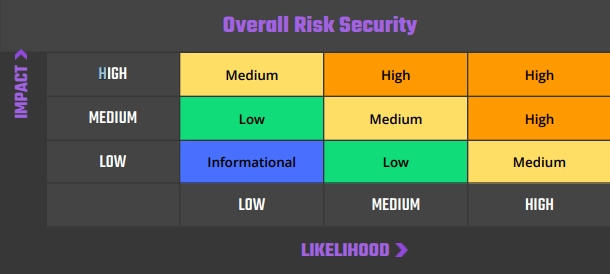
Vulnerabilities by Risk
High – Direct threat to key business processes.
Medium – Indirect threat to key business processes or partial threat to business processes.
Low – No direct threat exists. The vulnerability may be exploited using other vulnerabilities.
Informational – This finding does not indicate vulnerability, but states a comment that notifies about design flaws and improper implementation that might cause a problem in the long run.
Approach
Introduction
Openverse contacted Sayfer to perform penetration testing on their MetaMask Snap application, Openverse Wallet.
This report documents the research carried out by Sayfer targeting the selected resources defined under the research scope. Particularly, this report displays the security posture review for Openverse Wallet and its surrounding infrastructure and process implementations.
Our penetration testing project life cycle:

Scope Overview

Technical Overview

Scope Validation

Threat Model

Security Evaluation

Security Assessment
Scope Validation
We began by ensuring that the scope defined to us by the client was technically logical.
Deciding what scope is right for a given system is part of the initial discussion. Getting the scope right is key to deriving maximum business value from the research.

Threat Model
During our kickoff meetings with the client we defined the most important assets the application possesses.
We defined the largest current threat to the system as phishing attacks.

Security Evaluation Methodology
Sayfer uses OWASP WSTG as our technical standard when reviewing web applications. After gaining a thorough understanding of the system we decided which OWASP tests are required to evaluate the system.
Security Assessment
After understanding and defining the scope, performing threat modeling, and evaluating the correct tests required in order to fully check the application for security flaws, we performed our security assessment.
Issue Table Description
Issue title
| ID | SAY-??: An ID for easy communication on each vulnerability |
| Status | Open/Fixed/Acknowledged |
| Risk | Represents the risk factor of the issue. For further description refer to the Vulnerabilities by Risk section. |
| Business Impact | The main risk of the vulnerability at a business level. |
| Location | The URL or the file in which this issue was detected. Issues with no location have no particular location and refer to the product as a whole. |
Description
Here we provide a brief description of the issue and how it formed, the steps we made to find or exploit it, along with proof of concept (if present), and how this issue can affect the product or its users.
Mitigation
Suggested resolving options for this issue and links to advised sites for further remediation.
Security Evaluation
The following tests were conducted while auditing the system
Information Gathering
| Information Gathering | Test Name |
| WSTG-INFO-01 | Conduct Search Engine Discovery Reconnaissance for Information Leakage |
| WSTG-INFO-02 | Fingerprint Web Server |
| WSTG-INFO-03 | Review Webserver Metafiles for Information Leakage |
| WSTG-INFO-04 | Enumerate Applications on Webserver |
| WSTG-INFO-05 | Review Webpage Content for Information Leakage |
| WSTG-INFO-06 | Identify application entry points |
| WSTG-INFO-07 | Map execution paths through application |
| WSTG-INFO-08 | Fingerprint Web Application Framework |
| WSTG-INFO-09 | Fingerprint Web Application |
| WSTG-INFO-10 | Map Application Architecture |
Configuration and Deploy Management Testing
| Configuration and Deploy Management Testing | Test Name |
| WSTG-CONF-01 | Test Network Infrastructure Configuration |
| WSTG-CONF-02 | Test Application Platform Configuration |
| WSTG-CONF-03 | Test File Extensions Handling for Sensitive Information |
| WSTG-CONF-04 | Review Old Backup and Unreferenced Files for Sensitive Information |
| WSTG-CONF-05 | Enumerate Infrastructure and Application Admin Interfaces |
| WSTG-CONF-06 | Test HTTP Methods |
| WSTG-CONF-07 | Test HTTP Strict Transport Security |
| WSTG-CONF-08 | Test RIA cross domain policy |
| WSTG-CONF-09 | Test File Permission |
| WSTG-CONF-10 | Test for Subdomain Takeover |
| WSTG-CONF-11 | Test Cloud Storage |
Identity Management Testing
| Identity Management Testing | Test Name |
| WSTG-IDNT-01 | Test Role Definitions |
| WSTG-IDNT-02 | Test User Registration Process |
| WSTG-IDNT-03 | Test Account Provisioning Process |
| WSTG-IDNT-04 | Testing for Account Enumeration and Guessable User Account |
| WSTG-IDNT-05 | Testing for Weak or unenforced username policy |
Authentication Testing
| Authentication Testing | Test Name |
| WSTG-ATHN-01 | Testing for Credentials Transported over an Encrypted Channel |
| WSTG-ATHN-02 | Testing for Default Credentials |
| WSTG-ATHN-03 | Testing for Weak Lock Out Mechanism |
| WSTG-ATHN-04 | Testing for Bypassing Authentication Schema |
| WSTG-ATHN-05 | Testing for Vulnerable Remember Password |
| WSTG-ATHN-06 | Testing for Browser Cache Weaknesses |
| WSTG-ATHN-07 | Testing for Weak Password Policy |
| WSTG-ATHN-08 | Testing for Weak Security Question Answer |
| WSTG-ATHN-09 | Testing for Weak Password Change or Reset Functionalities |
| WSTG-ATHN-10 | Testing for Weaker Authentication in Alternative Channel |
Authorization Testing
| Authorization Testing | Test Name |
| WSTG-ATHZ-01 | Testing Directory Traversal File Include |
| WSTG-ATHZ-02 | Testing for Bypassing Authorization Schema |
| WSTG-ATHZ-03 | Testing for Privilege Escalation |
| WSTG-ATHZ-04 | Testing for Insecure Direct Object References |
Session Management Testing
| Session Management Testing | Test Name |
| WSTG-SESS-01 | Testing for Session Management Schema |
| WSTG-SESS-02 | Testing for Cookies Attributes |
| WSTG-SESS-03 | Testing for Session Fixation |
| WSTG-SESS-04 | Testing for Exposed Session Variables |
| WSTG-SESS-05 | Testing for Cross Site Request Forgery |
| WSTG-SESS-06 | Testing for Logout Functionality |
| WSTG-SESS-07 | Testing Session Timeout |
| WSTG-SESS-08 | Testing for Session Puzzling |
| WSTG-SESS-09 | Testing for Session Hijacking |
Data Validation Testing
| Data Validation Testing | Test Name |
| WSTG-INPV-01 | Testing for Reflected Cross Site Scripting |
| WSTG-INPV-02 | Testing for Stored Cross Site Scripting |
| WSTG-INPV-03 | Testing for HTTP Verb Tampering |
| WSTG-INPV-04 | Testing for HTTP Parameter Pollution |
| WSTG-INPV-05 | Testing for SQL Injection |
| WSTG-INPV-06 | Testing for LDAP Injection |
| WSTG-INPV-07 | Testing for XML Injection |
| WSTG-INPV-08 | Testing for SSI Injection |
| WSTG-INPV-09 | Testing for XPath Injection |
| WSTG-INPV-10 | Testing for IMAP SMTP Injection |
| WSTG-INPV-11 | Testing for Code Injection |
| WSTG-INPV-12 | Testing for Command Injection |
| WSTG-INPV-13 | Testing for Format String Injection |
| WSTG-INPV-14 | Testing for Incubated Vulnerability |
| WSTG-INPV-15 | Testing for HTTP Splitting Smuggling |
| WSTG-INPV-16 | Testing for HTTP Incoming Requests |
| WSTG-INPV-17 | Testing for Host Header Injection |
| WSTG-INPV-18 | Testing for Server-side Template Injection |
| WSTG-INPV-19 | Testing for Server-Side Request Forgery |
Error Handling
| Error Handling | Test Name |
| WSTG-ERRH-01 | Testing for Improper Error Handling |
| WSTG-ERRH-02 | Testing for Stack Traces |
Cryptography
| Cryptography | Test Name |
| WSTG-CRYP-01 | Testing for Weak Transport Layer Security |
| WSTG-CRYP-02 | Testing for Padding Oracle |
| WSTG-CRYP-03 | Testing for Sensitive Information Sent via Unencrypted Channels |
| WSTG-CRYP-04 | Testing for Weak Encryption |
Business logic Testing
| Business logic Testing | Test Name |
| WSTG-BUSL-01 | Test Business Logic Data Validation |
| WSTG-BUSL-02 | Test Ability to Forge Requests |
| WSTG-BUSL-03 | Test Integrity Checks |
| WSTG-BUSL-04 | Test for Process Timing |
| WSTG-BUSL-05 | Test Number of Times a Function Can be Used Limits |
| WSTG-BUSL-06 | Testing for the Circumvention of Work Flows |
| WSTG-BUSL-07 | Test Defenses Against Application Mis-use |
| WSTG-BUSL-08 | Test Upload of Unexpected File Types |
| WSTG-BUSL-09 | Test Upload of Malicious Files |
Client Side Testing
| Client Side Testing | Test Name |
| WSTG-CLNT-01 | Testing for DOM-Based Cross Site Scripting |
| WSTG-CLNT-02 | Testing for JavaScript Execution |
| WSTG-CLNT-03 | Testing for HTML Injection |
| WSTG-CLNT-04 | Testing for Client Side URL Redirect |
| WSTG-CLNT-05 | Testing for CSS Injection |
| WSTG-CLNT-06 | Testing for Client Side Resource Manipulation |
| WSTG-CLNT-07 | Test Cross Origin Resource Sharing |
| WSTG-CLNT-08 | Testing for Cross Site Flashing |
| WSTG-CLNT-09 | Testing for Clickjacking |
| WSTG-CLNT-10 | Testing WebSockets |
| WSTG-CLNT-11 | Test Web Messaging |
| WSTG-CLNT-12 | Testing Browser Storage |
| WSTG-CLNT-13 | Testing for Cross Site Script Inclusion |
API Testing
| API Testing | Test Name |
| WSTG-APIT-01 | Testing GraphQL |
Order audit from Sayfer
Security Assessment Findings
Origin Spoofing
| ID | SAY-01 |
| Status | Fixed |
| Risk | High |
| Business Impact | User controlled origin may allow malicious dapps to impersonate trusted domains in confirmation dialogs, leading to phishing attacks. |
| Location | – index.tsx; onRpcRequest() |
Description
The snap prioritizes the origin value provided in request.params (controlled by the calling dapp) over the validated origin parameter provided by MetaMask. This allows attackers to spoof their displayed origin in UI dialogs (e.g., showing openverse.network while the real origin is phishing.site).
MetaMask’s same-origin policy ensures the origin parameter reflects the true invoking domain, but the snap ignores this safeguard.
- tsx:22
const dappOrigin = (request Yparams as { origin?: string }).origin origin;Mitigation
We recommend using MetaMask’s validated origin parameter.
Non-standard Signing Implementation
| ID | SAY-02 |
| Status | Acknowledged |
| Risk | Medium |
| Business Impact | The usage of a homebrewed signing implementation bypasses MetaMask’s security model and thereby needlessly increases the risk of key leakage. |
| Location | – index.tsx; onRpcRequest(any, any) – case signTransaction – case signAllTransactions – case signMessage |
Description
The snap uses tweetnacl to sign raw messages with directly derived private keys (secretKey), instead of leveraging MetaMask’s native methods, such as eth_signTypedData_v4. This violates MetaMask’s key isolation principles and potentially introduces novel vulnerabilities.
- tsx:G2; case signTransaction
const signature = nacl.sign.detached(bs58.decode(message),
keyPair.secretKey);- tsx:81-84; case signAllTransactions
const signatures = messages
  .map((message: string) => bs58.decode(message))
  .map((message: Uint8Array) => nacl.sign.detached(message,
keyPair.secretKey))
.map((signature: Uint8Array | number[]) => bs58.encode(signature));- tsx:113; case signMessage
const signature = nacl.sign.detached(messageBytes, keyPair.secretKey);Mitigation
We recommend replacing the custom signing logic with eth_signTypedData_v4.
Missing Transaction Broadcasting Functionality
| ID | SAY-03 |
| Status | Acknowledged |
| Risk | Medium |
| Business Impact | Signatures are returned to untrusted dapps, which could misuse them. |
| Location | – index.tsx; onRpcRequest(any, any) – case signTransaction – case signAllTransactions – case signMessage |
Description
The snap signs transactions and messages but does not broadcast them, relying entirely on the dapp to handle on-chain submission. This increases reliance on potentially malicious dapps.
- tsx:G4-G7, 115-118; case signTransaction, case signMessage
return {
  publicKey: bs58.encode(keyPair.publicKey),
  signature: bs58.encode(signature)
};- tsx:8G-89; case signAllTransactions
return {
  publicKey: bs58.encode(keyPair.publicKey),
  signatures
};
Mitigation
We recommend implementing transaction broadcasting, or alternatively informing the user that their transaction will be handled by the dapp.
Missing Anti-Replay Protection
| ID | SAY-04 |
| Status | Acknowledged |
| Risk | Low |
| Business Impact | Signatures can be replayed across chains or contexts, potentially leading to unintended asset transfers. |
| Location | – index.tsx; onRpcRequest(any, any) – case signTransaction – case signAllTransactions – case signMessage |
Description
The snap signs raw messages without including chain-specific identifiers such as chainId, domain separators (e.g., EIP-712 domain), or nonces. Attackers could reuse signatures on other networks where the same message is valid.
Mitigation
We recommend prepending chain-specific prefixes such as \x19Openverse:\n{chainId} to messages before signing.
Missing Input Sanitization for User-Facing Content
| ID | SAY-05 |
| Status | Acknowledged |
| Risk | Low |
| Business Impact | The lack of input sanitization increases the risk of phishing or UI spoofing via maliciously crafted messages containing Markdown or deceptive links. |
| Location | – index.tsx; renderSignMessage(string, string) |
Description
renderSignMessage(string, string) displays raw user-provided messages using the <Text> component, which interprets Markdown syntax. An attacker could inject hyperlinks such as [Legit Site](evil.site) to trick users into approving malicious content.
- tsx:202-209
content: (
  <Box>
    <Heading>Sign message /Heading>
    <Text>{host} /Text>
    <Divider >
    <Text>{message} /Text>
    /Box>
)
Mitigation
Replace <Text> with the <Copyable> component for displaying messages to prevent Markdown rendering and ensure content is treated as plaintext.
Confusing Dialog Box
| ID | SAY-06 |
| Status | Acknowledged |
| Risk | Low |
| Business Impact | Users may accidentally approve malicious transactions due to information overload or lack of individual review. |
| Location | – index.tsx; renderSignAllTransactions(string, any) |
Description
renderSignAllTransactions(string, any) displays multiple transactions in a single dialog, making it difficult for users to scrutinize each transaction. This increases the likelihood of approving unintended or harmful actions.
- tsx:202-209
for (let i = 0; i < messages.length; i +) {
  uiElements.push(<Divider >);
    / uiElements.push(Text(`Transaction ${i + 1}`));
  uiElements.push(<Text>Transaction {(i + 1).toString()} /Text>);
    / uiElements.push(Copyable(messages[i]));
  uiElements.push(<Copyable value={messages[i]}> /Copyable>);
}

return snap.request({
  method: 'snap_dialog',
  params: {
    type: 'confirmation',
    content:
      (
        <Box>
          <Heading>Sign transactions /Heading>
          <Text>{host} /Text>
          {uiElements}
         /Box>
      )
                                   [ .]
}
Mitigation
Split bulk transactions into individual confirmation dialogs or add a summary screen highlighting critical details, for example total value or list of recipients before approval.