

Management Summary
Hathor contacted Sayfer Security in order to perform penetration testing on Hathor’s MetaMask Snap in 09/2025.
Before assessing the above services, we held a kickoff meeting with the Hathor technical team and received an overview of the system and the goals for this research.
Over the research period of 2 weeks, we discovered 4 vulnerabilities in the system.
In conclusion, several fixes should be implemented following the report, but the system’s security posture is competent.
After a review by the Sayfer team, we certify that all the security issues mentioned in this report have been addressed by the Hathor team.
Risk Methodology
At Sayfer, we are committed to delivering the highest quality penetration testing to our clients. That’s why we have implemented a comprehensive risk assessment model to evaluate the severity of our findings and provide our clients with the best possible recommendations for mitigation.
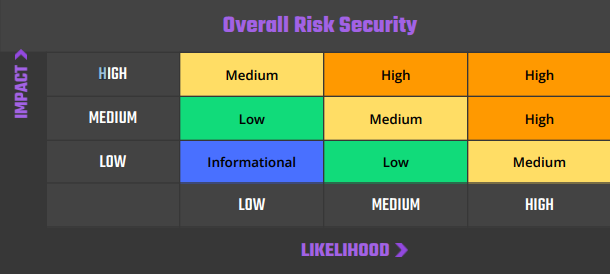
Our risk assessment model is based on two key factors: IMPACT and LIKELIHOOD. Impact refers to the potential harm that could result from an issue, such as financial loss, reputational damage, or a non-operational system. Likelihood refers to the probability that an issue will occur, taking into account factors such as the complexity of the attack and the number of potential attackers.
By combining these two factors, we can create a comprehensive understanding of the risk posed by a particular issue and provide our clients with a clear and actionable assessment of the severity of the issue. This approach allows us to prioritize our recommendations and ensure that our clients receive the best possible advice on how to protect their business.
Risk is defined as follows:
Vulnerabilities by Risk
High – Direct threat to key business processes.
Medium – Indirect threat to key business processes or partial threat to business processes.
Low – No direct threat exists. The vulnerability may be exploited using other vulnerabilities.
Informational – This finding does not indicate vulnerability, but states a comment that notifies about design flaws and improper implementation that might cause a problem in the long run.
| Severity | # of issues |
|---|---|
| Low | 2 |
| Medium | 2 |
| High | 0 |
| Informational | 0 |
Approach
Introduction
Hathor contacted Sayfer to perform penetration testing on their MetaMask Snap application
This report documents the research carried out by Sayfer targeting the selected resources defined under the research scope. Particularly, this report displays the security posture review for Hathor’s MetaMask Snap application and its surrounding infrastructure and process implementations.
Our penetration testing project life cycle:

Scope Overview

Technical Overview

Scope Validation

Threat Model

Security Evaluation

Security Assessment
Scope Overview
During our first meeting and after understanding the company’s needs, we defined the application’s scope that resides at the following URLs as the scope of the project:
- Hathor’s MetaMask Snap
- Audit commit: a4ef64ef7e2c7a7975a77cf9af282dd484947e4d
- Fixes commit: 63ece1c60b5e47af92b8c7e18b4efa77c1bf13ef
Our tests were performed from 07/09/2025 to 21/09/2025.
Scope Validation
We began by ensuring that the scope defined to us by the client was technically logical.
Deciding what scope is right for a given system is part of the initial discussion. Getting the scope right is key to deriving maximum business value from the research.

Threat Model
During our kickoff meetings with the client we defined the most important assets the application possesses.
We defined that the largest current threat to the system is the potential for attackers to siphon funds from the user’s wallet.

Security Evaluation Methodology
Sayfer uses OWASP WSTG as our technical standard when reviewing web applications. After gaining a thorough understanding of the system we decided which OWASP tests are required to evaluate the system.
Security Assessment
After understanding and defining the scope, performing threat modeling, and evaluating the correct tests required in order to fully check the application for security flaws, we performed our security assessment.
Issue Table Description
Issue title
| ID | SAY-??: An ID for easy communication on each vulnerability |
| Status | Open/Fixed/Acknowledged |
| Risk | Represents the risk factor of the issue. For further description refer to the Vulnerabilities by Risk section. |
| Business Impact | The main risk of the vulnerability at a business level. |
| Location | The URL or the file in which this issue was detected. Issues with no location have no particular location and refer to the product as a whole. |
Description
Here we provide a brief description of the issue and how it formed, the steps we made to find or exploit it, along with proof of concept (if present), and how this issue can affect the product or its users.
Mitigation
Suggested resolving options for this issue and links to advised sites for further remediation.
Security Evaluation
The following tests were conducted while auditing the system
Information Gathering
| Information Gathering | Test Name | Status |
| WSTG-INFO-01 | Conduct Search Engine Discovery Reconnaissance for Information Leakage | Pass |
| WSTG-INFO-02 | Fingerprint Web Server | Pass |
| WSTG-INFO-03 | Review Webserver Metafiles for Information Leakage | Pass |
| WSTG-INFO-04 | Enumerate Applications on Webserver | Pass |
| WSTG-INFO-05 | Review Webpage Content for Information Leakage | Pass |
| WSTG-INFO-06 | Identify application entry points | Pass |
| WSTG-INFO-07 | Map execution paths through application | Pass |
| WSTG-INFO-08 | Fingerprint Web Application Framework | Pass |
| WSTG-INFO-09 | Fingerprint Web Application | Pass |
| WSTG-INFO-10 | Map Application Architecture | Pass |
Configuration and Deploy Management Testing
| Configuration and Deploy Management Testing | Test Name | Status |
| WSTG-CONF-01 | Test Network Infrastructure Configuration | Pass |
| WSTG-CONF-02 | Test Application Platform Configuration | Pass |
| WSTG-CONF-03 | Test File Extensions Handling for Sensitive Information | Pass |
| WSTG-CONF-04 | Review Old Backup and Unreferenced Files for Sensitive Information | Pass |
| WSTG-CONF-05 | Enumerate Infrastructure and Application Admin Interfaces | Pass |
| WSTG-CONF-06 | Test HTTP Methods | Pass |
| WSTG-CONF-07 | Test HTTP Strict Transport Security | Pass |
| WSTG-CONF-08 | Test RIA cross domain policy | Pass |
| WSTG-CONF-09 | Test File Permission | Pass |
| WSTG-CONF-10 | Test for Subdomain Takeover | Pass |
| WSTG-CONF-11 | Test Cloud Storage | Pass |
Identity Management Testing
| Identity Management Testing | Test Name | Status |
| WSTG-IDNT-01 | Test Role Definitions | Pass |
| WSTG-IDNT-02 | Test User Registration Process | Pass |
| WSTG-IDNT-03 | Test Account Provisioning Process | Pass |
| WSTG-IDNT-04 | Testing for Account Enumeration and Guessable User Account | Pass |
| WSTG-IDNT-05 | Testing for Weak or unenforced username policy | Pass |
Authentication Testing
| Authentication Testing | Test Name | Status |
| WSTG-ATHN-01 | Testing for Credentials Transported over an Encrypted Channel | Pass |
| WSTG-ATHN-02 | Testing for Default Credentials | Pass |
| WSTG-ATHN-03 | Testing for Weak Lock Out Mechanism | Pass |
| WSTG-ATHN-04 | Testing for Bypassing Authentication Schema | Pass |
| WSTG-ATHN-05 | Testing for Vulnerable Remember Password | Pass |
| WSTG-ATHN-06 | Testing for Browser Cache Weaknesses | Pass |
| WSTG-ATHN-07 | Testing for Weak Password Policy | Pass |
| WSTG-ATHN-08 | Testing for Weak Security Question Answer | Pass |
| WSTG-ATHN-09 | Testing for Weak Password Change or Reset Functionalities | Pass |
| WSTG-ATHN-10 | Testing for Weaker Authentication in Alternative Channel | Pass |
Authorization Testing
| Authorization Testing | Test Name | Status |
| WSTG-ATHZ-01 | Testing Directory Traversal File Include | Pass |
| WSTG-ATHZ-02 | Testing for Bypassing Authorization Schema | Pass |
| WSTG-ATHZ-03 | Testing for Privilege Escalation | Pass |
| WSTG-ATHZ-04 | Testing for Insecure Direct Object References | Pass |
Session Management Testing
| Session Management Testing | Test Name | Status |
| WSTG-SESS-01 | Testing for Session Management Schema | Pass |
| WSTG-SESS-02 | Testing for Cookies Attributes | Pass |
| WSTG-SESS-03 | Testing for Session Fixation | Pass |
| WSTG-SESS-04 | Testing for Exposed Session Variables | Pass |
| WSTG-SESS-05 | Testing for Cross Site Request Forgery | Pass |
| WSTG-SESS-06 | Testing for Logout Functionality | Pass |
| WSTG-SESS-07 | Testing Session Timeout | Pass |
| WSTG-SESS-08 | Testing for Session Puzzling | Pass |
| WSTG-SESS-09 | Testing for Session Hijacking | Pass |
Data Validation Testing
| Data Validation Testing | Test Name | Status |
| WSTG-INPV-01 | Testing for Reflected Cross Site Scripting | Pass |
| WSTG-INPV-02 | Testing for Stored Cross Site Scripting | Pass |
| WSTG-INPV-03 | Testing for HTTP Verb Tampering | Pass |
| WSTG-INPV-04 | Testing for HTTP Parameter Pollution | Pass |
| WSTG-INPV-05 | Testing for SQL Injection | Pass |
| WSTG-INPV-06 | Testing for LDAP Injection | Pass |
| WSTG-INPV-07 | Testing for XML Injection | Pass |
| WSTG-INPV-08 | Testing for SSI Injection | Pass |
| WSTG-INPV-09 | Testing for XPath Injection | Pass |
| WSTG-INPV-10 | Testing for IMAP SMTP Injection | Pass |
| WSTG-INPV-11 | Testing for Code Injection | Pass |
| WSTG-INPV-12 | Testing for Command Injection | Pass |
| WSTG-INPV-13 | Testing for Format String Injection | Pass |
| WSTG-INPV-14 | Testing for Incubated Vulnerability | Pass |
| WSTG-INPV-15 | Testing for HTTP Splitting Smuggling | Pass |
| WSTG-INPV-16 | Testing for HTTP Incoming Requests | Pass |
| WSTG-INPV-17 | Testing for Host Header Injection | Pass |
| WSTG-INPV-18 | Testing for Server-side Template Injection | Pass |
| WSTG-INPV-19 | Testing for Server-Side Request Forgery | Pass |
Error Handling
| Error Handling | Test Name | Status |
| WSTG-ERRH-01 | Testing for Improper Error Handling | Pass |
| WSTG-ERRH-02 | Testing for Stack Traces | Pass |
Cryptography
| Cryptography | Test Name | Status |
| WSTG-CRYP-01 | Testing for Weak Transport Layer Security | Pass |
| WSTG-CRYP-02 | Testing for Padding Oracle | Pass |
| WSTG-CRYP-03 | Testing for Sensitive Information Sent via Unencrypted Channels | Pass |
| WSTG-CRYP-04 | Testing for Weak Encryption | Pass |
Business logic Testing
| Business logic Testing | Test Name | Status |
| WSTG-BUSL-01 | Test Business Logic Data Validation | Pass |
| WSTG-BUSL-02 | Test Ability to Forge Requests | Pass |
| WSTG-BUSL-03 | Test Integrity Checks | Pass |
| WSTG-BUSL-04 | Test for Process Timing | Pass |
| WSTG-BUSL-05 | Test Number of Times a Function Can be Used Limits | Pass |
| WSTG-BUSL-06 | Testing for the Circumvention of Work Flows | Pass |
| WSTG-BUSL-07 | Test Defenses Against Application Mis-use | Pass |
| WSTG-BUSL-08 | Test Upload of Unexpected File Types | Pass |
| WSTG-BUSL-09 | Test Upload of Malicious Files | Pass |
Client Side Testing
| Client Side Testing | Test Name | Status |
| WSTG-CLNT-01 | Testing for DOM-Based Cross Site Scripting | Pass |
| WSTG-CLNT-02 | Testing for JavaScript Execution | Pass |
| WSTG-CLNT-03 | Testing for HTML Injection | Pass |
| WSTG-CLNT-04 | Testing for Client Side URL Redirect | Pass |
| WSTG-CLNT-05 | Testing for CSS Injection | Pass |
| WSTG-CLNT-06 | Testing for Client Side Resource Manipulation | Pass |
| WSTG-CLNT-07 | Test Cross Origin Resource Sharing | Pass |
| WSTG-CLNT-08 | Testing for Cross Site Flashing | Pass |
| WSTG-CLNT-09 | Testing for Clickjacking | Pass |
| WSTG-CLNT-10 | Testing WebSockets | Pass |
| WSTG-CLNT-11 | Test Web Messaging | Pass |
| WSTG-CLNT-12 | Testing Browser Storage | Pass |
| WSTG-CLNT-13 | Testing for Cross Site Script Inclusion | Pass |
API Testing
| API Testing | Test Name | Status |
| WSTG-APIT-01 | Testing GraphQL | Pass |
Security Assessment Findings
Network change validation mismatch allows unvalidated persistence
| ID | SAY-01 |
| Status | Fixed |
| Risk | Medium |
| Business Impact | An attacker can pass validation with a correct params.newNetwork but persist a different, unvalidated data.newNetwork, leading to unexpected network switches and Snap malfunction. |
| Location | – src/utils/prompt.ts:45 |
Description
The check validates params.newNetwork in NETWORK_MAP but, after approval, persists data.newNetwork. The setNetwork then writes whatever string is provided and reconfigures the wallet using it. Because the persisted value is later trusted by the configuration routine, a crafted request can desynchronize what the user saw versus what the Snap actually stored. This creates a reliable path to redirect network traffic or crash the Snap.
case TriggerTypes.ChangeNetworkConfirmationPrompt:
    if (!(params.newNetwork in NETWORK_MAP)) {
      // Reject if the newNetwork is not a valid option
      return { data: false };
    }
    approved = await changeNetworkPage(data, params, origin);
    if (approved) {
      await setNetwork(data.newNetwork);
    }
    return { data: approved };
Mitigation
We recommend adjusting the logic and using value from params instead.
Extended private keys (xpriv, authxpriv) are persisted in Snap state
| ID | SAY-02 |
| Status | Fixed |
| Risk | Medium |
| Business Impact | If any later flaw allows state access or exfiltration, the entire account hierarchy is compromised as storing raw xprivs increases the impact of such an attack, compared with on-demand derivation or storing only xpubs. |
| Location | – src/utils/wallet.ts:48-63 |
Description
On first run, the Snap derives both account and auth extended private keys and writes them to persistent Snap state before constructing the wallet. While Snap state is encrypted at rest, storing master keys increases the consequences of any future bug that surfaces state content. In contrast, deriving on demand minimizes the time secrets exist in process memory and avoids long-term exposure.
accountPathXpriv = walletUtils.xprivFromData(
      Buffer.from(hathorNode.privateKey.substring(2), 'hex'),
      Buffer.from(hathorNode.chainCode.substring(2), 'hex'),
      hathorNode.parentFingerprint,
      hathorNode.depth,
      hathorNode.index,
      network
    );
    authPathXpriv = walletUtils.xprivFromData(
      Buffer.from(authHathorNode.privateKey.substring(2), 'hex'),
      Buffer.from(authHathorNode.chainCode.substring(2), 'hex'),
      authHathorNode.parentFingerprint,
      authHathorNode.depth,
      authHathorNode.index,
      network
    );
Mitigation
Avoid persisting xprivs and derive on-demand or persist only xpubs. If persistence is unavoidable, add an additional encryption layer and never expose these values via RPC.
Environment is not prepared for release
| ID | SAY-03 |
| Status | Fixed |
| Risk | Low |
| Business Impact | Readable source and dev-mode semantics lower the cost of reverse-engineering and may expose dev behavior or sensitive strings and logs in production. |
| Location | – snap.config.ts |
Description
The Webpack is forced to mode: ‘development’ with devtool: ‘source-map’, optimization.minimize: false, and the environment sets NODE_ENV: ‘development’. Source maps and readable bundles make it trivial to diff changes and discover internal assumptions or feature flags. This also increases the risk of accidentally shipping debug logs or test credentials.
Mitigation
Enable a production build through mode: ‘production’, remove source maps from the distributed artifact, enable minification, and ensure no dev-only code paths remain.
Prototype keys pass whitelist due to use of in operator
| ID | SAY-04 |
| Status | Fixed |
| Risk | Low |
| Business Impact | Prototype property names like, toString pass the check and can be used as “valid” keys, enabling misconfiguration or DoS when later dereferenced as network configs. |
| Location | – src/utils/prompt.ts:38 |
Description
Validation uses params.newNetwork in NETWORK_MAP, which returns true for inherited keys. The NETWORK_MAP is a plain object, so prototype keys are included. In practice, strings like toString will pass validation even though they are not enumerated networks. When consumed as config keys later, these values resolve to undefined and induce runtime faults.
case TriggerTypes.ChangeNetworkConfirmationPrompt:
    if (!(params.newNetwork in NETWORK_MAP)) {
      // Reject if the newNetwork is not a valid option
      return { data: false };
    }
Mitigation
Use Object.hasOwn(NETWORK_MAP, key) or a set of allowed names to avoid inheriting prototype keys.